
Frequently Asked Questions
Looking for a specific topic? Skip ahead to one of these categories:
FAQ: Straw Panels
Don’t see the answer you are looking for?
-
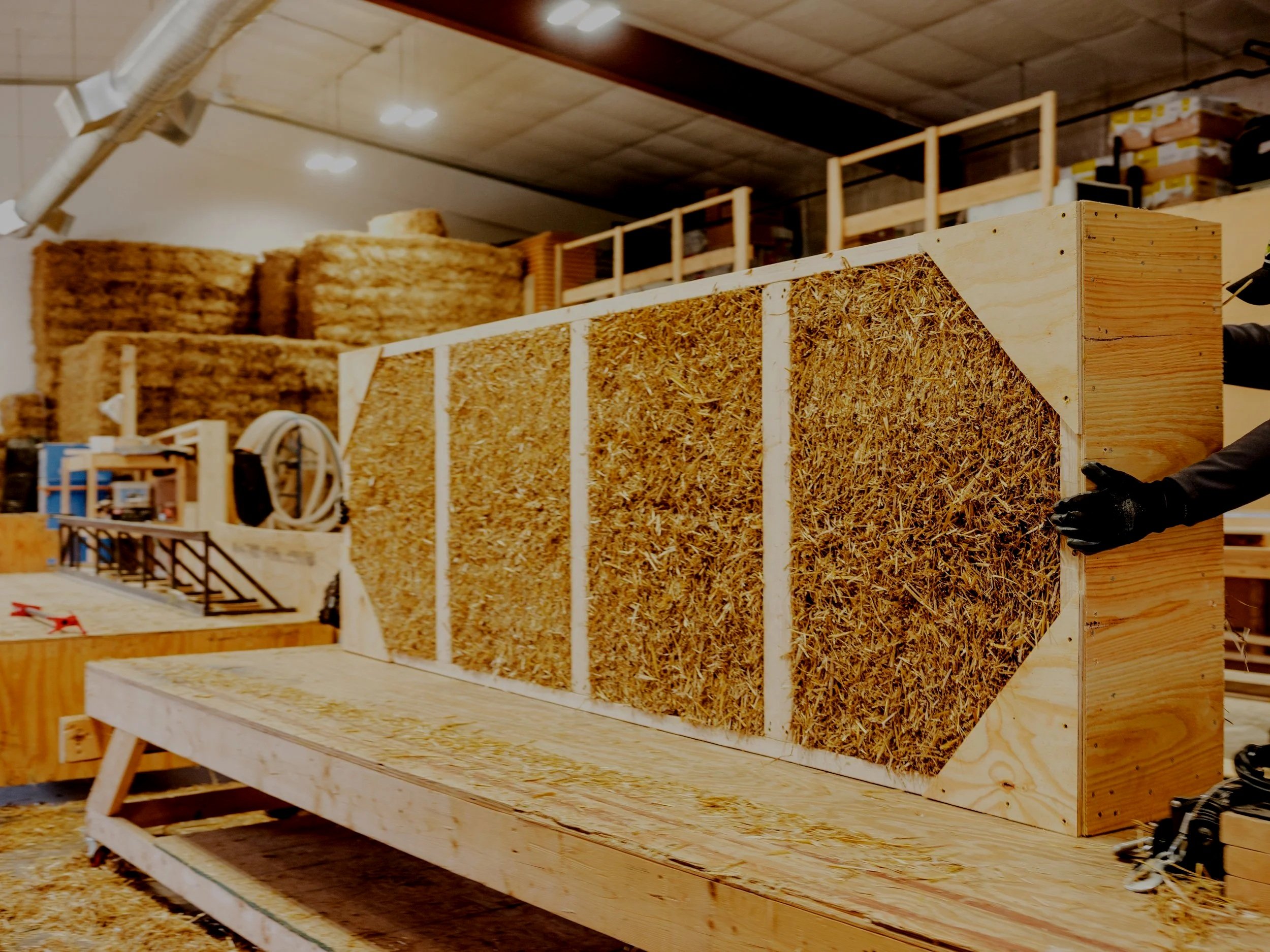
Straw insulated panels respond well to fire due to their dense composition. They behave like heavy timbers in fire, where the outer layers char and insulate the interior layers. Unlike synthetic insulation materials like foam, straw is naturally fire-resistant and has proven durability in various conditions. But don’t take our word for it - check out the ASTM - E84 rating for straw bale and this study conducted by CASBA on fire resilience of straw bale homes in a wildfire zone.
-
Testing our buildings over a 25 year period has shown that the oldest, properly designed buildings are the driest. Straw has the ability to transfer moisture concentrations within itself and supports good drying potential when combined with a well-designed assembly, though it cannot tolerate being wet for extended periods.
We emphasize airtight construction and moisture management strategies, such as drainage, deflection, drying, and diffusion, to mitigate moisture issues and ensure long-term durability and performance. Straw insulated panels are resilient to moisture for short periods of time, behaving similarly to wood. -
We have not had one case of pests in our straw bale homes in the Northeast over the 25 years of our practice. Straw insulated panels have low pest risk due to their high density, making them difficult for pests to tunnel through.
Additionally, pests like insects or microbiological organisms typically indicate a moisture problem, which we avoid with proper moisture control strategies. Overall, through careful construction practices, a focus on moisture control, and the airtight nature of the panels, straw insulated panels tend to be largely inhospitable to pests. -
Through a review conducted by the California Straw Building Association (CASBA), it has been concluded that our products are in line with similar European products, which have an R-value of R-38. Our floor and roof panels, filled with Timberfill HP, are R-55 and R-60, respectively. Additionally, our panels can be easily detailed to meet higher R-value requirements.
-
With the ability to store 60 times more carbon than is expended in their production and transportation, straw naturally sequesters carbon, mitigating the overall environmental impact of home building.
Incredibly, our Casitas are climate positive, sequestering significantly more carbon than is released during the building process. More generally, straw bale structures have demonstrated remarkable durability, enduring for at least a century when well-maintained.
Beyond their longevity, straw bale buildings are cost-effective, widely available, fire-resistant, and offer enhanced insulation—an excellent combination for eco-friendly and high-performance construction solutions. -
Also known as carbon sequestration, carbon storing is a way of capturing carbon emissions and storing them. Straw naturally sequesters gaseous carbon by storing it within the plant during the growth phase, acting as a vital mechanism to drawdown atmospheric carbon emissions.
By harnessing the innate ability of straw to sequester carbon, straw bale buildings are an essential component of regenerative building practices, contribute to a healthier planet, and play a crucial role in addressing climate change. -
It is possible to use a crane to install our straw and Timberfill HP panels, however, it is not required. In fact, our panels are smaller than the average sized SIP and only requires a telehandler in most 2-story applications. In single-story applications, especially in wall-only applications, the panels can be installed by hand witha small team or by the use of a dolley or forklift.
-
For custom panel projects, our lead time is at minimum 3 months to account for design collaboration and fabrication. In most seasons, New Frameworks is booking delivery dates about 6-9 months in advance, and occasionally up to 12 months in advance.
However, we are also a founding member of the Seed Collaborative, which is a decentralized network of straw panel manufacturers that have all been trained through our manufacture and install training program. Even if New Frameworks does not have production availability to meet your timeline, it is likely someone in the collaborative does. You can reach out to us directly or the companies in the collaborative individually - you’ll always get routed to the company that makes the most sense from a financial, timeline, and carbon perspective no matter where/with which company you start.
-
A standard straw panel (39” W x 14” D x 8’ H) weighs about 350 lbs. However, each custom panel project is unique, and even our pre-designed Casitas have many diferent types, sizes, and weights of panels.
-
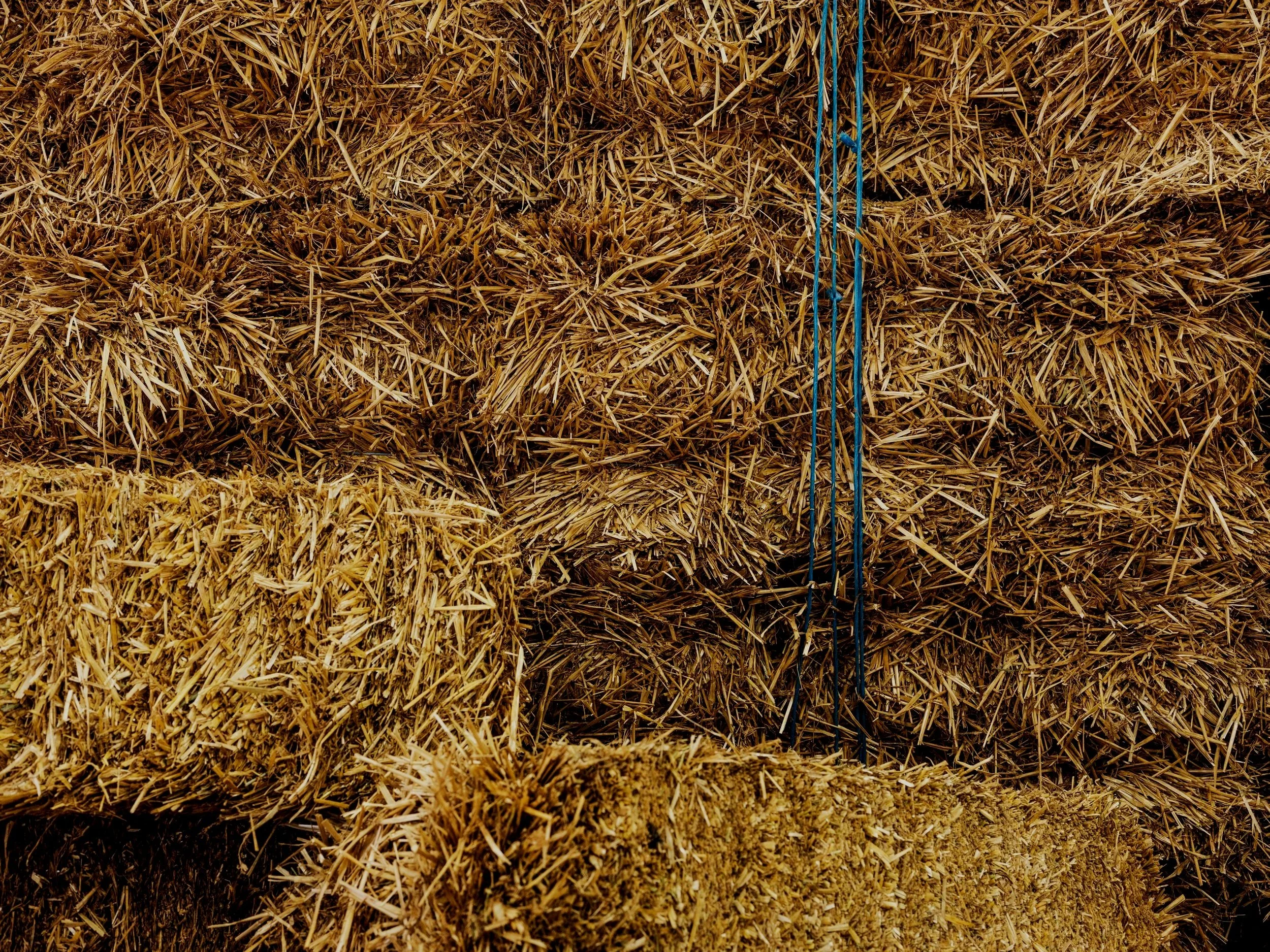
No - we source local organic straw from the Nitty Gritty Grain Company in Charlotte, Vermont. Straw is the second cut of grain production, and it is baled and installed without binders or treatments.
-
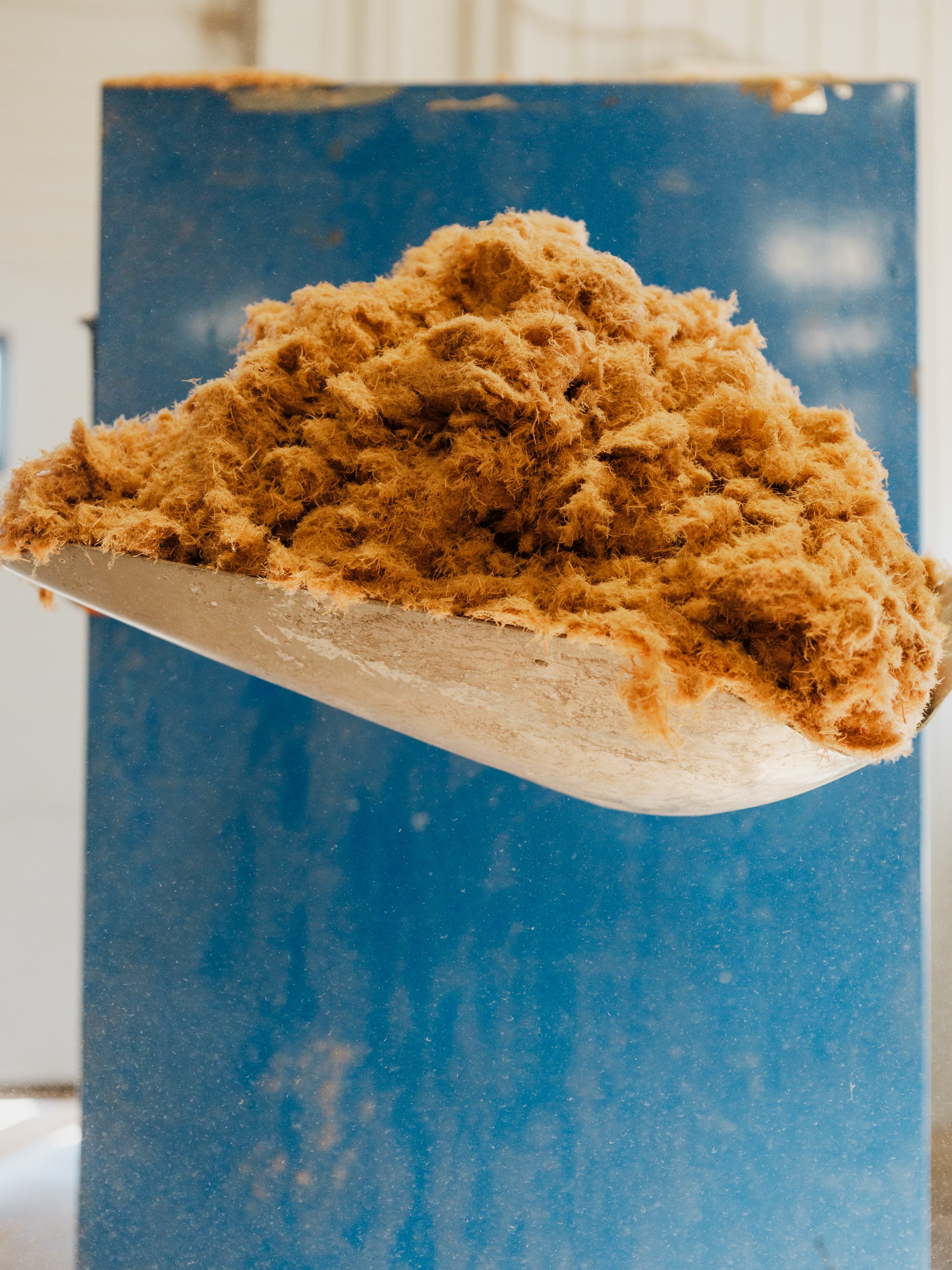
Straw is the dry, hollow stalk left behind after grain is harvested. It’s made primarily of cellulose and lignin fibers, which are very similar in chemical makeup to wood. Hay is made from grasses and legumes grown as animal feed, so it’s nutrient-rich and typically not as suitable for construction.
-
Our main offices are in Essex Junction, VT. Typically we can offer installation serices up to 1 hour away from our facilities. We can ship panel and Casita kits to most areas of Canada, the U.S. and Mexico.
We also collaborate with members of the Seed Collaborative, who have facilities across the US. We do not yet have a package for travel-installations, however, we are actively exploring this option.
-
High-performance, natural building combines energy-efficient design with low-toxicity, renewable materials to create homes that are comfortable, durable, healthy, and dramatically more carbon-storing than conventional construction.
Check out this blog on how New Frameworks prioritizes high performance, natural building methods in practice.
-
Yes! We have monthly shop tours posted on our events page.
-
For custom panel projects, we can either work with your existing architect to optimize the design for the most cost-effective use of our panels, or we can create the architectural design for you. No architect is necessary when purchasing a pre-desgned Casita.
-
There are typically five foundational questions to answer to ensure you are ready to move forward with a new construction project. Answering these questions - whether you are working with New Frameworks or otherwise - can help you align your goals and your process.
Do I own the land I am looking to build on, or have permission to build from the owners?
Will permitting allow the construction of the structure I am looking to build?
Does my timeline for construction work with the lead times of vendors (like New Frameworks as a panel provider), and/or the availability of contractors to conduct site work and construction of the unit?
If I am utilizing a loan to finance this project, do I qualify for financing, and do the disbursement schedules of that loan meet the requirements of my contractors and/or vendors?
Does the estimated project total cost fit within my outlined budget?
Asking yourself these questions can help you prepare for conversations with vendors and contractors and ultimately will help prepare you to efficiently set the stage for new construction.
-
Yes! We work closely with engineers to engineer our panels. We can also connect our customers with them to be the engineer of record if desired.
-
To our knowledge, New Frameworks was the first straw panel manufacturer in the U.S., building off of decades of research and implementation by European companies.
Can’t get enough?
Check out our blog for hot takes, thoughtful insights, and deeper dives into the why behind what we do. It’s where we unpack big ideas, share lessons from the field, and explore what it really means to build healthier homes for people and the planet.
FAQ: Casitas
Built for people, planet, and community, by folks who care deeply about all three.
Don’t see the answer you are looking for? Shoot us a message!
-
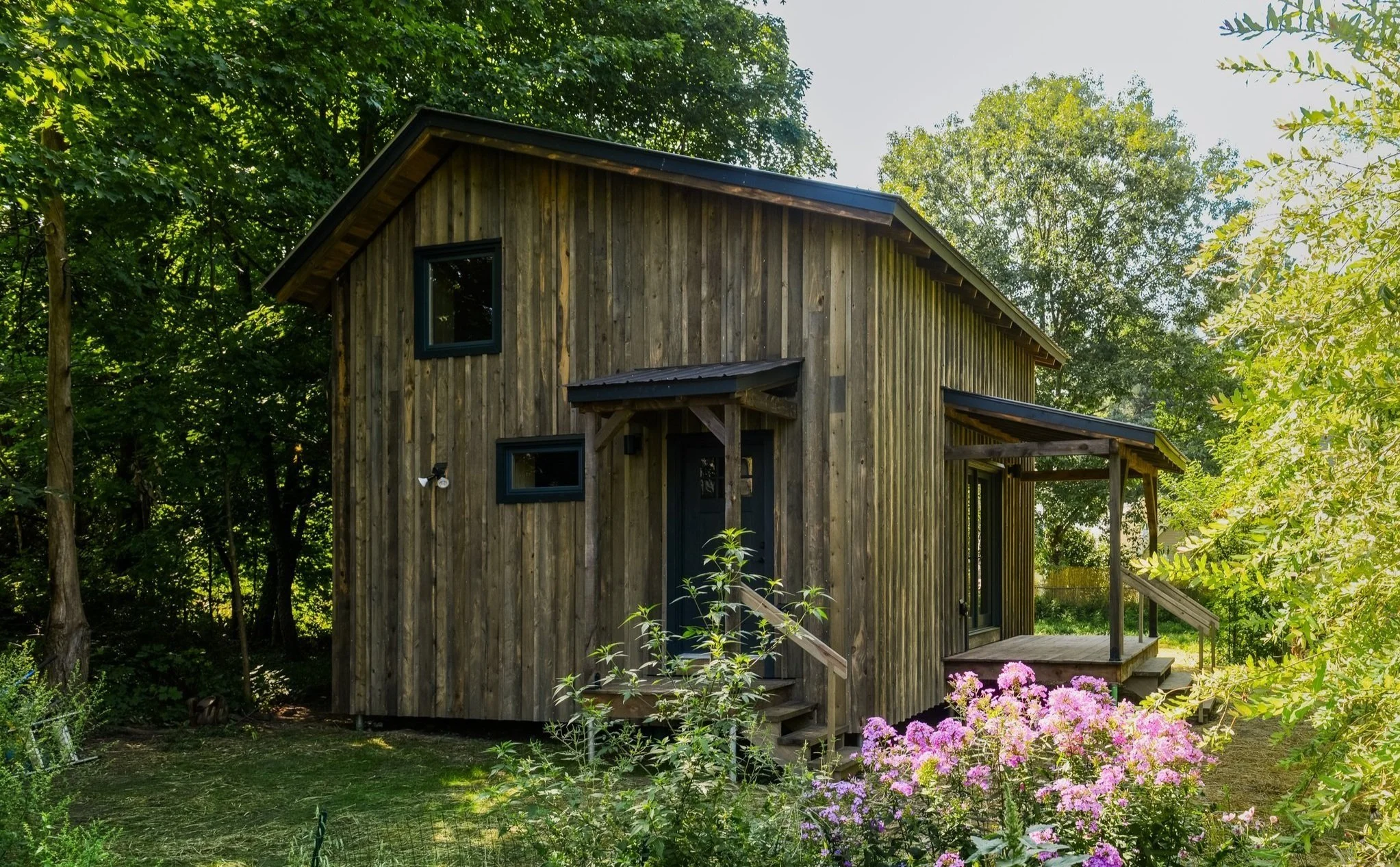
Yes! While we always defer to your town zoning laws and permitting requirements, it is typically allowed to use Casitas (even if they were designed to be ADU’s) as primary dwelling units, as long as town ordinances allow.
-
Unfortunately, most of our Casitas are lived-in full time. For this reason, it can be difficult to schedule a showing. We do however, occasionally offer tours of units that are nearing completion of construction, or when we have special access granted from the homeowners. Please feel free to contact us if you’d like to be put on a list to be updated when a casita showing is available. Also, check out our 3D tours on our Casitas page to virtually tour available Casitas!
-
Yes! There are some customizations that have already been structurally vetted and priced, available in a list of add/alts specific to each Casita. If a customization request falls outside of that list, then customers can explore feasibility and pricing of desired customtizations through what’s called a design consultation contract. This is an hourly consulting service billed at $125/hr, and requires a 2-hour minimum deposit to begin.
-
As long as there is production capacity, we can fabricate Casitas in 1-6 weeks depending on the size of the unit. If any customizations are requested, then that timeframe expands according the complexity of the alterations. Production availability varies by region and season. Spring/summer delivery is our most popular, and often requires booking more than six months in advance. For other seasons, customers can often production availability within three months of their original inquiry.
-
Yes! The Casitas are currently engineered to meet the wind, snow, and seimic requirements of about 97% of the continental U.S. If additional engineering is required, customers can work with our design and engineer team under a design consultation contract. This is an hourly consultation service billed at $125/hour and requires a 2-hour minimum deposit to begin.
-
Yes! We offer bulk discounts when two or more Casitas are purchased at the same time. The total discount varies by the type of unit, but usually is between 3-5% of the kit total.
-
Yes, we offer our Casitas’ architectural designs that can be purchased and modified by an engineer/architect to your preferred building assembly. Please note that the architectural sets for the Casitas when purchased independently of the kit do not include the structural details.
-
Yes! You can attach multiples of the same size unit together at the gable ends when the roof pitch and direction are maintained. You can also attach multiple units of any size together via a breezeway.
-
Yes! If you are within our service range, we can send over a representative to explore and document existing conditions of the site and structure to incorporate into the design set under an hourly consulting contract. If you are not within our service ranges, you will need to explore and document existing conditions with a third-party architect, contractor or engineer.
-
While our preferred foundation (and what the standard Casita is designed to fit) is a helical pier foundation system, our Casitas can be installed on any type of foundation system that also supports a wood-framed structure.
-
Our Casitas are designed for accessibility and ease of assembly, especially for those with small or inexperienced teams.
Check out our Casita Install Guide for a walk through on the process and a detailed list of recommended tools and materials.
FAQ: Seed Collaborative & Seed Proogram
Don’t see the answer you are looking for?
Seed Collaborative
-
New Frameworks is an independent straw panel manufacturing, building performance, and design/build company that is a founding member of the Seed Collaborative, a decentralized network of straw panel manufacturers, and hosts the Seed Program, a three-year training on how to design, manufacture and install straw panels. Collaborators in the Seed Collaborative (Rare Forms, Building Integrity, etc.) are also their own, independent panel manufacturing companies (among other specialties) that have undergone the first year of New Frameworks’ Seed Program training.
-
No, it’s not a franchise, meaning, each individual company is not a subsidiary of the whole. Rather, the Seed Collaborative is a network of mission-aligned, collaborative panel manufacuring teams who are seeking to decrease competition through collaboration.
-
While we are exploring various avenues for membership, the Seed Collaborative is still in its first few years of development, and the only current path to membership is through the Seed Program.
Seed Program
-
Our sessions start each year in April, and run about once a week, remotely, for the rest of the calendar year. Typically the sessions consist of info sessions, group discussions, and individual presentations. The sessions are each about an hour long, although, individual time commitment beyond the schedule sessions depends marjorly on the type and scale of operations you are looking to conduct, and the speed at which you are attempting to do so.
Beyond the weekly remote sessions, there is one intensive in-person week-long training that usually takes place in the summer, and is coordinated based on participant availability.
-
It’s possible for an individual to join the Seed Program, however, we encourage applicants to consider the amount of person-power it takes to get a business up and running when applying. A majority of our participants are groups of 2-5 individuals looking to start the business together, or are part of a larger organization looking to diversify or expand.
-
At this time, the Seed Program only offers three tracks: Design Only, Manufacture and Install Only, or the Full Program, which includes both of the aforementioned. While we are considering other avenues in the future, our near term plan is to continue investing our time and capacity in the continual development of these existing pathways.
FAQ: Other
We’re happy you’re here. We’d love to hear about what you’re working on!
-
New Frameworks was founded in 2006, although our co-founders were working and building with straw long before that.
-
Yes, for a long while, we operated as a custom design/build company before transitioning to primarily acting as a straw panel manufacturer. We do still act partially as a design/build team with our healthy homes and building performance work, but we are no longer building new, custom homes from the ground up.
-
Yes, we offer a monthly shop tour of our offices and fabrication facility in Essex Junction, VT. You are welcome to RSVP on our events page if you’d like to attend.
-
We are always looking to build our network of reputable contractors to install and finish our Casitas and Custom Panel projects across the country. Please contact us and give us a brief overview of where and where you are, and why you are interested in working with us!